Monthly ArchiveJuly 2008


Life Insurance 29 Jul 2008 07:02 pm

The Importance of Life Insurance

Family
The main reason for buying life insurance is LOVE.  There are other less important reasons, such as business continuation, funding buy-sells, paying estate taxes, but they all boil down to love.  Why is it so important?  Try to imagine for a moment those left behind and the financial burden they would have with out some life insurance.  The average funeral costs over $5,000, not to mention the left over medical bills that always seem to be present after a death.
My cousin recently lost his 19 year old daughter due to a tragic ATV accident.  The family is sending money because there was no life insurance, and BEFORE the funeral arrangements could be made they had to show that they had at least $3,000 available for costs.
We all insure our homes, and cars.  Perhaps it is because we are required to, by law, or by contract.  It is too bad we are not required to purchase at least some life insurance.  Imagine for a moment you were given a ATM machine; a very special ATM machine.  This machine would let you withdraw a specific amount of money each month.  All you have to do is spend 40 hours of your time each week cleaning and polishing it IE your  job.  Would you insure the machine?  This machine doesn’t need electrical power to run but it can permanently quit for number of reasons.  Would you insure the machine for 1% of the money it produced?
That is what life insurance does.  It provides cash for the family left behind when an income producer dies.  Term life insurance is much less costly than people realize. 
For Example:
Male Age 40 $100,000 coverage  $168 per year
Female Age 40 $100,000 coverage $146 per year
THAT IS LESS THAN $.50 per day for $100,000 cash paid to the family upon the insureds death.
Both of our “main” insurance carriers ERIE & AUTO-OWNERS offer discounts on the home and auto insurance if the family buys life insurance from them.  That lowers the cost of the insurance even more!  Different people will pay different rates some higher some lower due to their health, family history and other factors.  Send us an e-mail for a quick and confidential quote.  We can get the same quotes, SAME RATES, that are quoted from the insurance web-sites.

Auto Insurance Beavercreek 26 Jul 2008 05:08 pm

Auto Insurance In English Please

Photo of Ford Mustang GT500

What Does It All Mean?

Insurance companies use terms that are difficult for some folks to translate so it can be understood.  We will attempt to help define some terms and try to simplify them so they are easier to understand.

Comprehensive or “Comp”:  This term refers to coverage for your car.  The best way to put it is that this coverage refers to damage to your car caused by everything other than a collision.  The “Comp” coverage should include things like theft, vandalism, hail, falling objects, glass (windshield) breakage, flood, insects, anything other than collision.  This will also include hitting an animal or person.  Hitting a deer that tears up the front of your car would be considered a “comp” claim.  What it won’t cover are the usual things such as wear and tear, intentional acts, war, manufacturing defects, and so on.  The “comp” coverage on your car is about the broadest most comprehensive type of insurance that you can buy because it includes things such as flood, earthquake, rodents, vermin, and insects.  Remember each company is different so it is important to read your policy or talk with your agent.  This coverage usually has a deductible, which means, the customer pays the deductible FIRST, before the insurance company will pay.  The higher the deductible, the lower the premium charge.


Collision:  This term is fairly well understood.  This is when your car is damaged by a collision with another vehicle, bike or object.  Remember that hitting an animal is not a collision.  If a kid on a bike hits your parked car that is a collision.  If you hit a pothole that is a collision, or hitting a ditch would be a collision.  Hitting a tree or other stationary object is a collision.  This coverage also usually has a deductible.


ACV:  This term refers to Actual Cash Value or in english, the value of the car.  What is the book value or retail value of the car just before the moment of loss.  Many factors are involved in determining the “value” such as the year, make, model, current mileage, options, and overall condition of the car.  Insurance companies have extensive data bases to calculate these values based on the area of the country you live and what price the car could be reasonably be sold.  This is often a source of great frustration with people because it never seem “fair”.  Our web site has a link to the NADA and to auto-trader to help folks determine the ACV or value of their car.


Bodily Injury Liability:  This is very important coverage that pays on behalf of the customer for injuries they caused in an accident.  Included in this coverage are defense costs.  This means the insurance company will hire and pay for the defense of a suit against the customer who may or may not have caused an accident.  Even though most accidents don’t involve injuries, when there are injuries, the medical bills, time off work, pain and suffering costs can really multiply.  The law requires owners or operators of motor vehicles to have this coverage, the call it financial responsibility.  There is usually no deductible for this coverage.  Some people call this the insurance for the other guy.


Un-insured and under-insured bodily injury:  This is a fun one.  First of all, this coverage is designed for INJURY only, not for coverage for a car.  This coverage is activated in the event that YOU are injured in an accident, and you are not at fault AND the person(s) at fault has no or less insurance than you.  Then you can collect injury, pain and suffering, loss of work, and such against the person who CAUSED the accident from your own policy.  A lot of claims are paid under this coverage because 20% (or so) of Ohio drivers do not carry any liability insurance.  This coverage protects the customer from financial loss just like the “regular” bodily injury does. 


We recommend people carry high deductibles to help keep their insurance premiums down, but we also recommend people consider and carry high limits of liability.  We are a very litigious society and one mistake that leads to an accident can dramatically affect a persons financial future or worse wipe out their life time of savings.

Auto Insurance Beavercreek 16 Jul 2008 08:23 pm

Rented Car Coverage

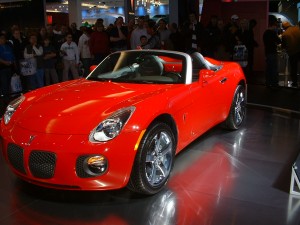
Pontiac Convertable

What is and what isn’t covered regarding a rented car

It is summer time, the time for family vacations.  How will the personal auto policy cover a rented car?  Does the credit card company cover it?  What about buying the protection from the rental car agency? 

Insurance companies will vary on how they provide coverage to a rented car so check with the insurance agent regarding coverage extending to the rented car.  Typically, the liability insurance will transfer to the rented car.  Actually the liability will extend to a rented moving van or truck in most cases as well.  Be careful that the rented vehicle is rented personally, for personal use.  Personal auto policies are not written to cover business uses.

Ok, so the liability will extend, what about coverage for the rented car itself?  Again, check with the insurance agent regarding what coverage will extend to the rented car.  In most cases, the insurance carrier will extend the “comp” and “collision” coverages to the rented car if they are already providing it on the current auto policy on at least one of the owned vehicles.  At least one of the vehicles on the personal auto policy must have the “comp” and “collision” coverage listed.  There is another “catch”.  The rented vehicle must be a “PRIVATE PASSENGER AUTO” as defined by the carrier.  Pick up trucks, passenger vans are usually ok, anything bigger are not.  Watch out for the moving vans and trucks, flat bed trucks, box trucks are examples of vehicles that would NOT be covered. 

Be aware that the auto insurance policy may not cover all the expenses that could occur should the rented car get damaged.  Most rental car agencies will charge a “claim processing fee”.  This will not be covered by the personal auto policy.  If the rented car is going some time to get repaired the rental car agency will continue to charge rental fees because the car is “unable to be rented” and this extra charge will not be covered by the insurance.  There are other things that could be charged by the rental car agency that the personal auto policy won’t cover.

We suggest buying the “damage waiver” from the rental car agency.  This is NOT insurance.  It is just what is says, a damage waiver.  The car can be returned in 50 garbage bags and the renter could walk away without owing a dime.  Provided the conditions of the contract were met.  Be careful to understand the contract and all the conditions regarding who can drive the car, where it can be driven, and the condition of the driver while the car is being operated.    

Ask the insurance agent about what the insurance carrier will and will not cover, and find out how much the rental car agency charges for the “damage waiver”, then decide based on how long the car will be rented, and think about the “possibility” or “risk” of an accident or damage to the car.  It could be the rented car is being driven in Boston or Chicago or another big busy city, which would increase the risk.  Perhaps it is a replacement for a wrecked car and it is just for a couple of days at home.  There is no “wrong” or “right” decision, but a little planning and knowledge can save hundreds perhaps thousands later.

Auto Insurance Beavercreek 12 Jul 2008 10:24 pm

Auto Insurance Savings Tips

Top 10 ways to lower your auto insurance rates from Edmunds.com


Top 10 Ways To Lower Your Car Insurance Bill
By Warren Clarke, Automotive Content Editor

If you’re shopping for car insurance, you know there are certain crucial factors influencing your rate that are out of your hands. Such factors include your age, gender and record of prior claims.
Despite this, there’s a lot you can do to score a lower rate, and your choices bear more power than you might think. Here are 10 tips guaranteed to help you get the best rate possible on your auto insurance.

  1. Get more than one rate quote before you commit. “Company prices are very different, and it pays to shop around. You can easily wind up paying double from one company to the next,” says J. Robert Hunter, director of insurance with the Consumer Federation of America, a national watchdog group.Want to get a sense of who the low-priced carriers are? The National Association of Insurance Carriers offers a map on its Web site that lists each state’s regulators. Click on your state and you’re taken to the state’s Department of Insurance Web site. Its consumer buying guide compares insurance premiums across a range of companies. You’ll also learn how many complaints each company has logged. Surprisingly, you don’t have to sacrifice service quality to score a low premium. “A lot of the lower-priced companies have the best service rates,” says Hunter.
  2. Evaluate insurance costs before you buy your vehicle. The year, make and model of your vehicle can have a profound impact on your insurance rate. All else being equal, new, expensive or sporty cars will cost more to insure than older, cheaper and more utilitarian vehicles. But you could find a substantial discrepancy even when comparing the cost to insure similar cars. So if you’ve got a few models on your shortlist, contact your carrier to see what rate each vehicle commands. Doing so could ultimately net you a windfall in savings when the time comes to pay your premium.
  3. Go high on deductibles. If you’re willing to give a little with your deductible, you can wind up saving big on your rates. “If you go from a $250 to a $1,000 deductible, you can save between 25 and 40 percent on your policy,” says Hunter. You can then set aside a portion of these funds to cover your costs in the event of a claim.
  4. Nix collision and/or comprehensive coverage on older cars. If your older car has comp and collision coverage, you might find yourself paying more in insurance than the car is worth. “Take your comp and collision premium and add it up, then multiply it by 10. If your car is worth less than that, don’t buy the coverage,” says Hunter. If you’re worried about being left overexposed, consider this: The typical policyholder makes a claim only once every 11 years, and reports a total loss only once every 50 years.
  5. Mind your credit score. An increasing number of carriers are considering credit scores when making rate calculations. “Your credit score can be very important in determining your rate,” says Hunter. “You can wind up paying up to 50 percent more if you have a bad credit score.” Keep your credit score in tip-top shape by paying bills in a timely manner and by regularly checking that there are no items on your history that do not belong to you.
  6. Ask about low-mileage discounts.Many carriers offer discounts to policyholders whose annual mileage is lower than the norm. Maybe you have a short commute. Or maybe your participation in the office vanpool results in fewer hours spent in your daily driver. Whatever the case, your low mileage can score you a reduced rate with some companies, so be sure to inquire about available discounts.
  7. Ask about group insurance discounts. Oftentimes, insurance companies offer discounts to policyholders who are members of certain organizations or professions, such as veterans, engineers or teachers. Request a list of these groups from your carrier to see if you qualify — you might be pleasantly surprised.
  8. Ask about all other discounts.Some carriers offer discounts to policyholders whose vehicles bear certain safety features, like anti-theft devices or motorized seatbelts. Others give reduced rates to senior citizens, and to students whose grades meet certain requirements. “Many carriers offer discounts. Ask for them when you’re shopping,” says Hunter.However, Hunter offers one caveat: “Some of the companies that offer the highest discounts have the highest rates, so don’t get too focused on discounts. Some high-priced companies offer high discounts, but at the end of the day you’re still paying more.”
  9. Avoid lapses in coverage. Even a brief lapse in coverage can disqualify you from receiving discounts. “They use lapses in coverage to increase your premium,” says Hunter. Pay your insurance bills on time. And if you’re switching carriers, make sure not to quit your previous carrier until the new coverage takes effect.
  10. Think twice about paying in installments. Most carriers charge an administration fee to pay in installments. One carrier surveyed levied a $10 charge per installment to those who opted to break up their bill. The solution? Pay your premium up front, if at all possible.Of course, this charge is more significant for those with small premiums. If you’ve got a king-sized premium and feel you’d get a better rate of return by investing your funds elsewhere instead of paying up front, then the installment route will probably best suit your needs.


Auto Insurance 11 Jul 2008 03:08 am

Auto Insurance Money Saving Tip

When Do you remove the “Comp” & Collision coverages from your car?

I was talking to a friend about this just the other day.  First of all and most importantly, there is no “time” to do this.  It has to do with what we call your threshold of pain.  The coverage on your car is about the best insurance for all the things it covers.  It covers collision and the “COMP” coverage basically covers the car for anything other than a collision.  The usual things are not covered, such as, intentional acts, act of war, nuclear detonation, wear and tear and others.  Your car (in most cases) will depreciate over time and at some point policy holders remove the “comp” and collision because it just isn’t worth it.  This is when you have to figure out your threshold of pain.  Here are the economics of it.  First you need to determine what is the ACV value of the car.  What can the car be sold for?  Or most importantly, what will the insurance company pay for the car?  There is no sure fire way to get this “right” but there are some ways to get close.  First, try looking up the value at NADA to try to determine the “neighborhood” of the price range it will fall into.  Be honest about the condition of the car, and use the lower value, remember we are talking about insurance companies here.  Try Auto-Trader to see if you can find the exact year, make, and model of your car and try to get as close to the same mileage as your car.  This is an excellent way to help prove why you think your car is worth what you think it is worth.  Once you determine the value of the car then factor in the following: your deductible will not be paid to you, and look up your collision premium, because you have also paid that out of pocket. 


Look at this example:  The ACV of your car is $2,000 and you have a $500 deductible, and your collision premium (already paid) was $58, you will only benefit $1,442.  Now this number is your threshold of pain number.  What this means is, is the $58 savings worth the CHANCE of not getting $1,442?  What would you do with the $1,442?  For some people who have not had a claim in 10 years, they would much rather take the risk and save the premium because they can live with the POSSIBILITY of having a total loss and not getting any money from the company.  Every one’s threshold of pain is different when it comes to money, so it is a very personal decision.  It is YOUR policy, YOUR premium dollars your paying so make the best decision for what you are comfortable with.  If there is a loan or lien on the car, the bank will most likely not allow removal of the Comp or collision.  The State requires liability on any currently registered auto so removing comp and collision will not effect the liability coverages. 

Talk to your agent and find out what your premium savings would be and figure out if it is worth the savings.

Home Owners Insurance 08 Jul 2008 01:49 am

Trees Downed By Storms

Many people have had trees or tree branches, downed due to storm activity recently.  Homeowners insurance policies may cover some of the costs involved in the clean up.  While policy coverages vary from company to company some of the things discussed in this article are common to most homeowner insurance policy coverages.  The coverage will depend on the specifics of the downed tree.  HOW it came down and WHERE or WHAT it landed on.  IF the tree is struck by lightning, then most insurance policies will “pay” for the repair, or removal of that tree, up to $500 or in some cases $1,000.  If the tree is damaged or blown down by wind, tornado or hurricane, then the policy will generally only respond by a $500 PER TREE removal coverage.  In most cases, the policy will also limit tree removal coverage to $500 or $1,000 PER STORM.  So if you are unfortunate to have many blown down trees your policy will pay a small amount to have those trees cut up and removed.  In almost every case, if the tree hits your house, or barn, or shed, or a fence, or swimming pool, no matter if by lightning or wind, the structure it hits will be covered AND the part of the tree that hit the structure can be covered to be removed.  Be careful about unattached structures, be it a barn, shed, or detached garage, if that building is used in any way for, or by a business, then your homeowner policy may not cover that building AT ALL.  You also want to be careful with autos.  Any auto, including motor homes, camper trailers, pop-up campers, ATVs, and motorcycles are not covered by homeowners insurance.  They must be covered by an auto policy and have physical damage coverage or “comprehensive” or “comp” coverage to collect for repairs to that vehicle. 
So what happens if a tree from your yard blows over and smashes your neighbors shed, or fence, or hits thier house?  Who’s insurance pays for those repairs?  The answer is your neighbors insurance will respond to that situation.  It doesn’t matter if it was caused by wind or lightning.  Think about it.  It is not your negligence the wind blew a perfectly healthy tree over on your neighbors house.  What if the wind was blowing the other direction and it hit your house?  This is why we purchase home insurance, to pay for damage to your house from a tree blown down on it.  Think of it this way, if a strong tornado picked up a tree from 2 blocks away and threw the tree down on your house, are you going to investigate where that tree came from so the guilty party can pay up?  Of course not, it was an act of nature, just as wind, and lightning, and trees, are an act of nature.  Where a tree falls cannot possibly be controlled or predicted during a storm.

Auto Insurance 08 Jul 2008 01:06 am

High Gas Prices/ Drive Less and Lower Insurance rates

I Pulled this article from the Ohio Department of Insurance web site.  Check your auto policy to see HOW you are rated.  Look for commute, or to and from work, and more specifically how many days per week and how many miles each way.  If you stop your daily commute in exchange for car pooling, or public transportation, let your agent know and you could save money on your car insurance as well as fuel costs.  
Wednesday, June 25, 2008Driving Less Because of High Gas Prices Could Lead to Lower Insurance Premiums


COLUMBUS — As gas prices hover around $4 a gallon across the state, many Ohioans are driving less, using public transportation or car pooling to get to work. Ohio Department of Insurance Director Mary Jo Hudson is encouraging Ohioans to tell their insurance agents if they are using their cars less, as it may result in a decrease in their auto insurance premiums.


“How much a person drives their car is one of the key factors insurance companies use to determine auto premiums,” said Director Hudson. “Changing your car’s designation from ‘work’ to ‘pleasure’ could result in a lower premium.”


Most insurance companies divide drivers into three categories: pleasure drivers, those who drive 15 miles or less one way to work and those who drive 15 miles or more one way to work. Drivers who drive as part of a carpool may be eligible for pleasure driver status if they drive less than two days a week or two weeks in a five week period. Also, Ohioans who have recently moved closer to their jobs or have switched jobs to a location closer to their home may also be eligible for lower premiums.


A change in designation could save a driver anywhere from 5-15% depending on the insurance company. A quick call to your insurance agent will determine whether or not you qualify for a rate reduction and how much that reduction will be.


Ohioans with questions concerning insurance are encouraged to call the Department’s consumer services hotline, 1-800-686-1526. Additional tips and more information about insurance, including a link to the Insure U web site, can be found at the Department’s web site, www.ohioinsurance.gov.


# # #

Lampton Insurance Beavercreek 05 Jul 2008 02:05 pm

Lampton Engle Agency In Beavercreek

Brian E. Lampton, CIC, LUTCF


I Started In the insurance business back in 1990 as a Nationwideagent.  In 1997 I left Nationwide and started an independent agency from scratch.  I decided that the job of an independent agent was to find the best insurance for the clients.  A captive agent’s job is to find clients for their company.  I moved the business to Beavercreek Ohio in 1995.  I joined the Beavercreek Chamber of Commerce and the Beavercreek Rotary Club.  I am a member of the PIA and of NAIFA - Dayton.  As a member and graduate of the Certified Insurance Counselors I am required to take 20 hours of continuing education each year.


The agency specializes in Personal service in helping individuals and families and small business owners with their personal auto, home, and life insurance.  Not to mention the toys we can cover such as motorcycles, boats, personal watercraft, atv’s classic cars or vintage boats.  We also specialize in business insurance for the small business owner.  We put together custom insurance programs for artisan contractors, restaurants, auto repair shops, beauty salons, metal works, residential and commercial property owners and many many others.  We can help with the Commercial liability, property, inland marine, and commercial auto.


Our staff is courteous, friendly and knowledgeable.  We care about doing the best possible job for our clients.  We value our client relationships and their privacy.  Call Brian or Debi today at 937-427-8444 and ask for a comparison, you’ll be glad you did.


Auto Insurance 04 Jul 2008 11:37 pm

The 10 Easiest Cars to Get Insured

I found an interesting article from CarInsuranceRates.com entitled “The 10 easiest cars to get insured.”  Which might also translate to the least expensive models for insurance.  Each make and model will vary from company to company.

“The first thing an insurance company looks at when offering you a quote is your driving history. Have a spotless one, and you’ll definitely get a better rate than a guy who has a glove box full of tickets.

The insurance companies also considers the sort of car you drive, including its sticker price, the cost to repair the vehicle, replacement value, safety features, and how well it will withstand an accident. The lower the cost of claims for a vehicle, the lower the rates, and therefore the easier it is to get insured.

Here is a list of the top ten least expensive vehicles to insure, that have a sticker price of less than $50k, according to the Highway Loss Data Institute (HLDI):
1. Oldsmobile Silhouette
2. Pontiac Montana
3. Saturn L Series Wagon
4. Chrysler PT Cruiser
5. Saturn L Series Sedan
6. Chevrolet Venture
7. Chevrolet Astro
8. Saturn Vue
9. Jeep Wrangler
10. Oldsmobile Bravada

The HLDI also lists vehicles that are the least expensive based theft, injury and collision claims. The least expensive theft claim models are:
1. Buick LeSabre
2. Mercury Grand Marquis
3. Buick Century and Saab 9-5 four-door (tie)
4. Buick Park Avenue and Pontiac Montana (tie)”

It is always a good idea to call your agent BEFORE you buy and ask for quote on the model or models you are considering.